Colors of Birch →Kokosom
Product designer, then co-founder and creative director
2011 — 2016
3D printing, made to measure
Fabrigate Tmi, then Kokosom Oy
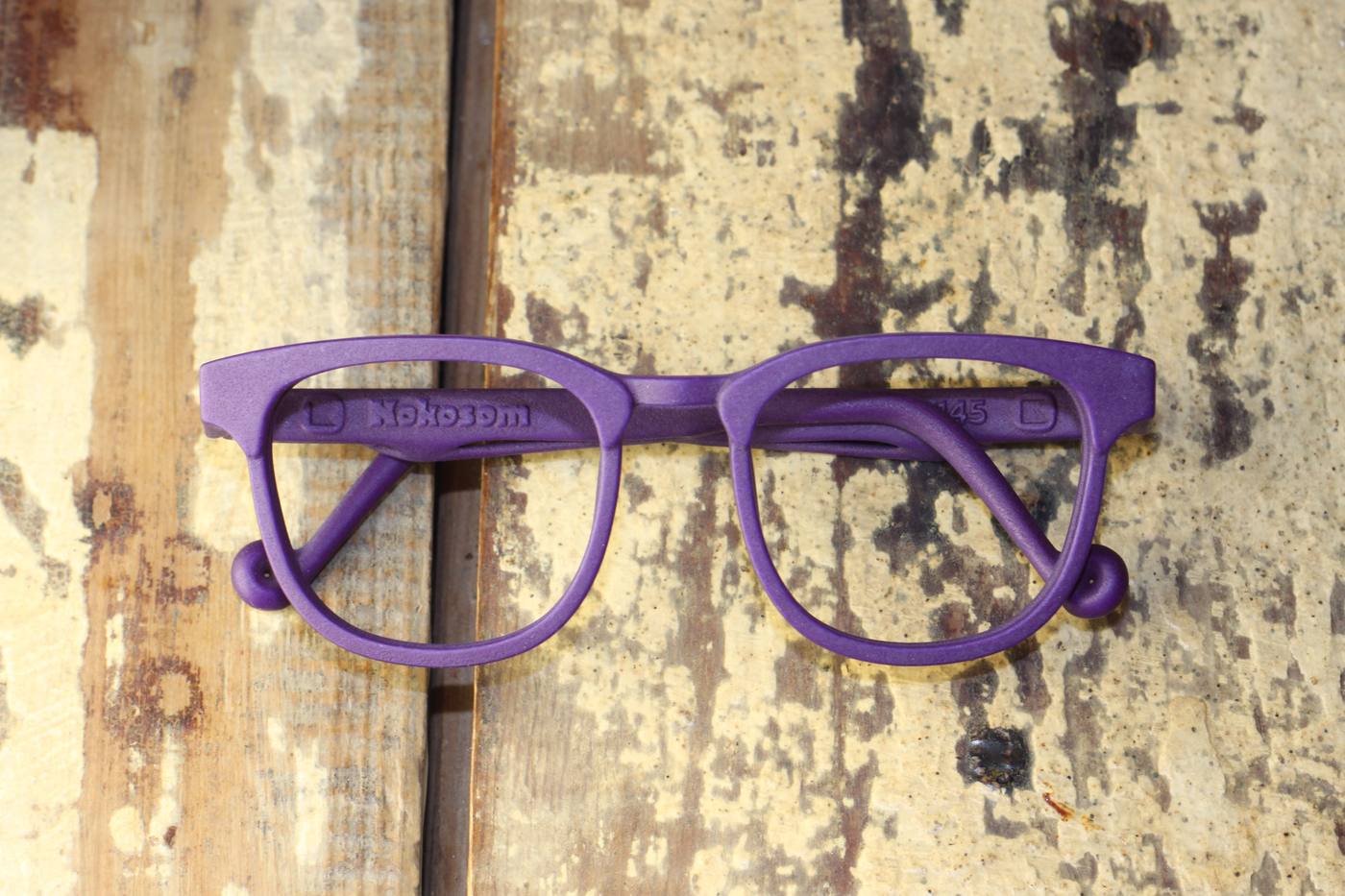
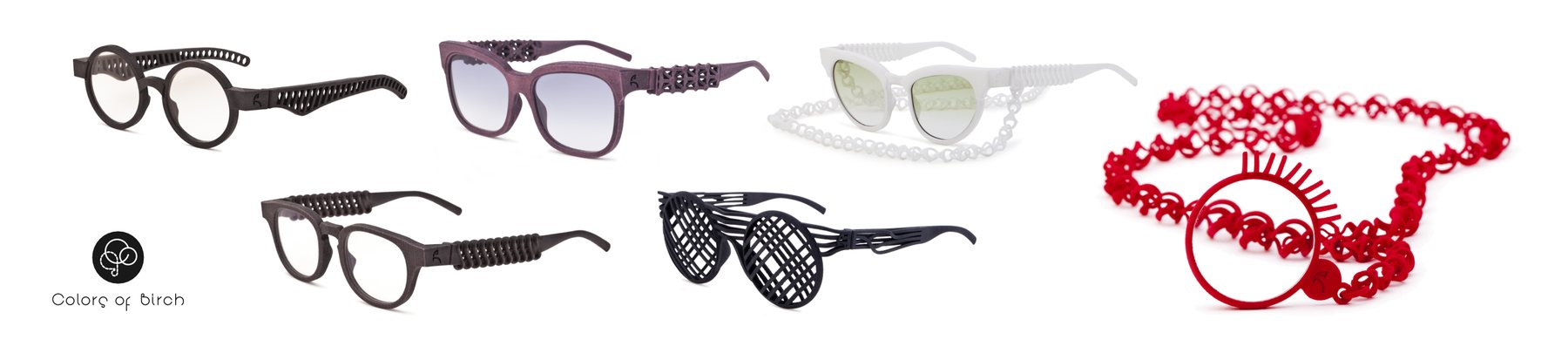
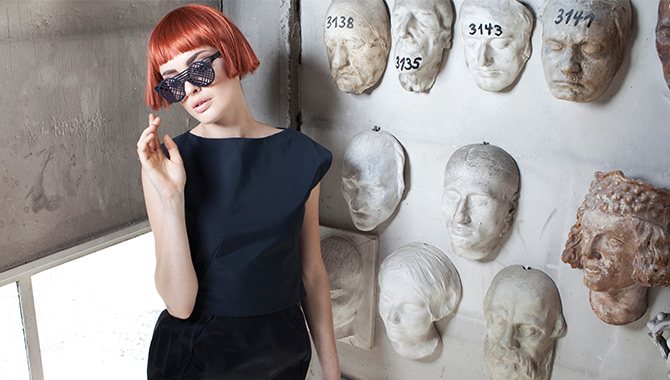
Colors of Birch was never a company. It was a brand — a place to put 3D-printed spectacles and sunglasses while working out whether anyone wanted them. From 2013 I ran it through my own practice, Fabrigate Tmi.
Eyewear was the hard case: a frame has to sit on a face, hold a lens, and survive being folded twice a day. The Titanic collection was built with Vesa Pallasvesa, an optician with forty years behind the counter. His constraints — hinge, bridge, lens seat — set the geometry. Sintering set everything else free. Launched in Paris in 2011, exhibited in Vienna and London in 2012.
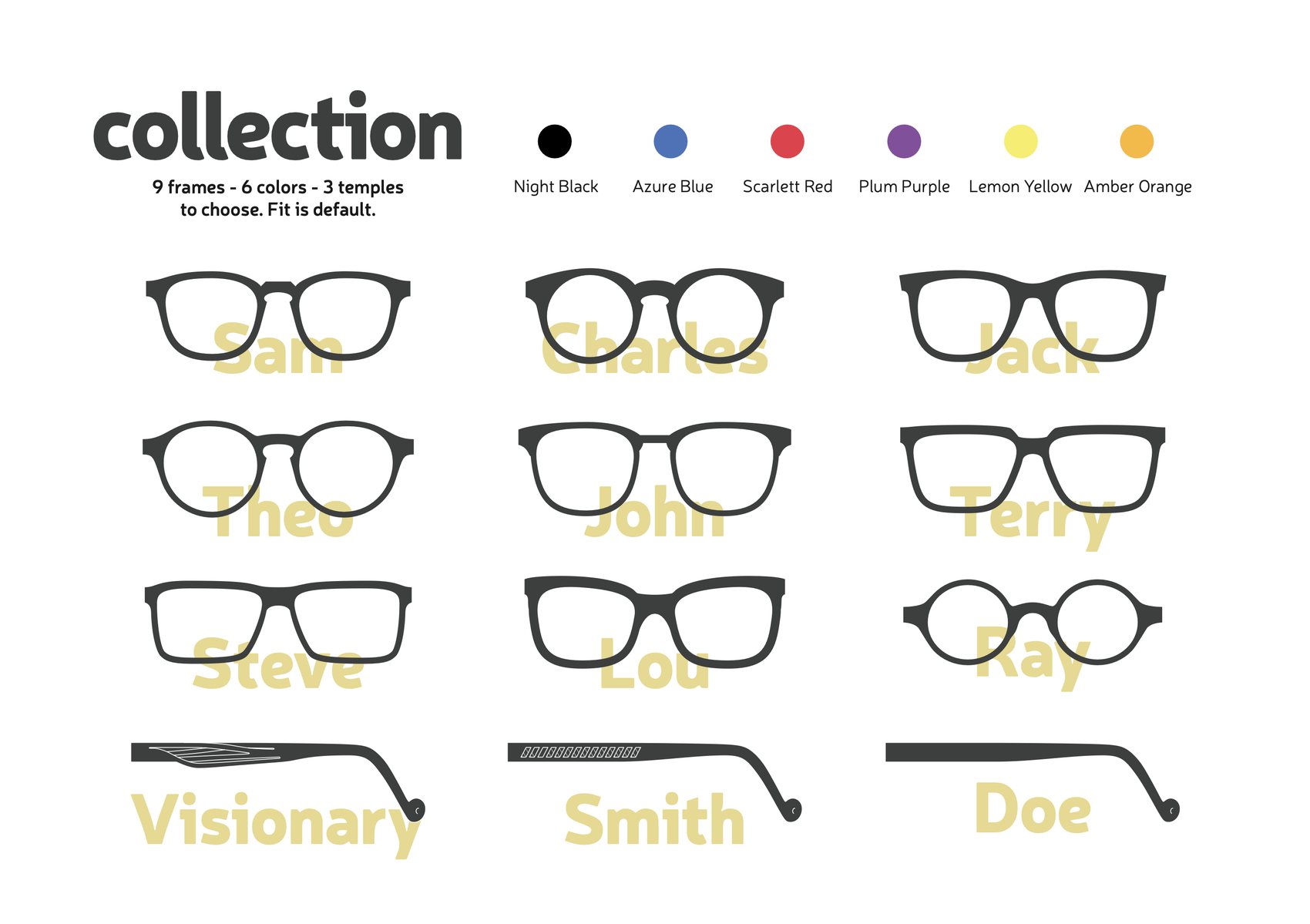
The brand proved the frames could exist. It did not prove anyone would buy them. So the next version was a company with a name on the trade register: three founders, two from business and one from design, and a catalogue built as a grammar rather than a list — nine fronts, three temples, six colours. Fit was not an option. Fit was the default.
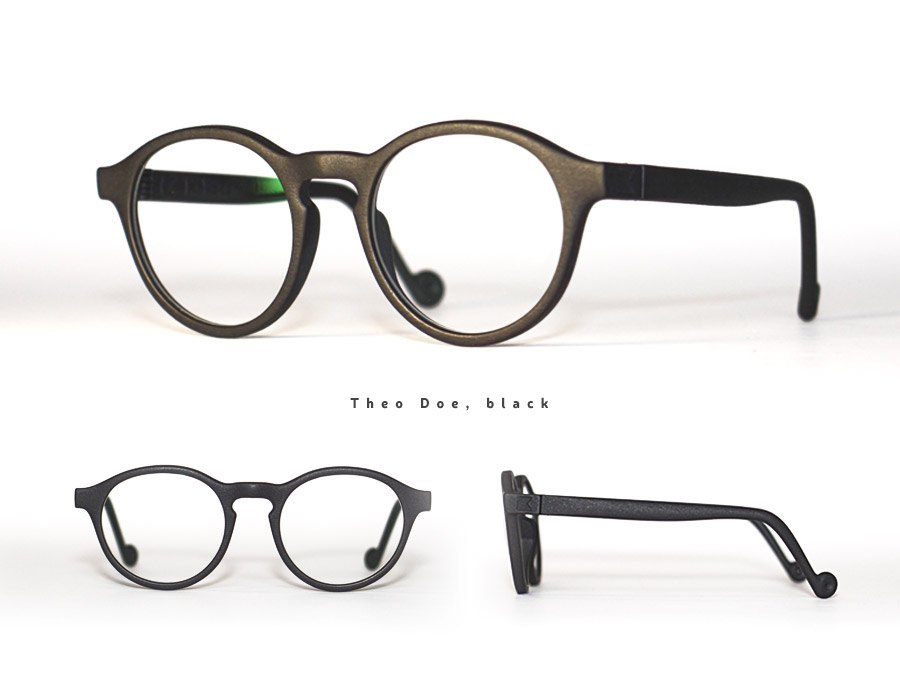
Every frame carried a first name and every temple a surname, so a pair was ordered the way a person is introduced: Theo Doe, black. The fitting happened in person at a pop-up — measure the face, choose the combination, print it for that head only, with its own temple length embossed into the arm. Two lens grades, roughly €200 and €300 with lenses in.
Custom fit is not a design problem. It is a manufacturing problem, and printing is the only tool that makes a batch of one cost what a batch of a thousand costs.
The bottleneck was never the printer. It was the tape measure: a pop-up fitting does not scale, and an online store needs a way to measure a face through a screen. 3D scanning was the direction we were pushing toward.
Neither Fabrigate nor Kokosom was ever wound up. They simply stopped getting my attention in 2016, when I co-founded 3DBear — the same problem at a scale I could not solve one face at a time. Five years of printing objects for individuals turned into a decade of teaching other people to print their own.